For many musicians, inspiration strikes at home, but without the right setup, capturing those ideas can feel impossible. The good news is that building a functional, professional-quality home studio is more achievable than ever, even on a budget.
Start with the Right (Affordable) Gear
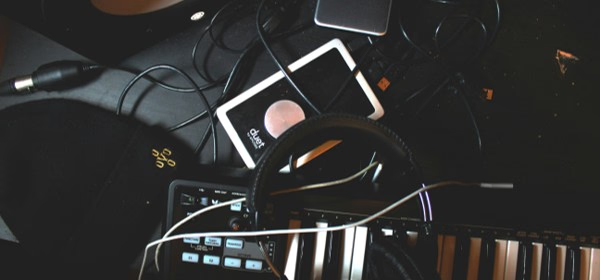
You don’t need a room full of expensive equipment to record great music. A reliable computer, a modest audio interface, and one quality microphone can go a long way. Entry-level interfaces from trusted brands offer clean preamps and low latency at an affordable price, while versatile microphones can handle vocals, instruments, and voice work without breaking the bank.
Here are some of my preferred favorites:
Pair that setup with Avid Pro Tools, the industry-standard DAW used in professional studios worldwide. Learning Pro Tools early helps musicians develop workflows that translate directly to real studio environments and collaborative projects.
Optimize Your Space for Better Sound
Acoustics matter just as much as gear. Simple improvements like using rugs, curtains, bookshelves, or foam panels can reduce unwanted reflections and make recordings clearer. Positioning your speakers correctly, keeping them at ear level, and avoiding corners can dramatically improve mixing accuracy.
You can take this further with small, strategic upgrades. Adding bass traps in room corners helps tame low‑end buildup—one of the biggest challenges in home studios. Treating first‑reflection points on your side walls and ceiling creates a more accurate listening environment, which leads to better mix decisions. Even organizing your room layout so your desk faces the shorter wall can improve stereo imaging and overall balance.
Even small rooms can sound good when treated intentionally. The goal isn’t perfection, it’s control. A well-organized, acoustically balanced space makes recording and mixing faster, easier, and far more enjoyable.
Build Professional Skills at Home
Having the right setup is only part of the equation. Structured Pro Tools training teaches musicians how to manage sessions, edit efficiently, use automation, and apply tools like Elastic Audio and virtual instruments. Courses such as Avid Pro Tools Fundamentals I and Fundamentals II help bridge the gap between home recording and professional production standards. For those ready to take the next step, earning Pro Tools Certification shows future collaborators and employers that you understand professional workflows.
Scott is an AVID Certified Expert Instructor (ACI) for Pro Tools and has taken over 50 post-Doctoral courses in the field of audio, acoustics, audio for video, and live sound applications. In this pursuit of this area of study, Beckett has been involved with the renovation and implementation of new recording equipment in various business and Religious spaces, changes in acoustic environments, and production of many albums that all involve student learning and engagement.